


Summer is your Secret Weapon
What Every Tennis Player Should Know About Training in the Heat
By Paul Pisani

It's 8:15 on a July morning in Northeast Florida.
The courts are already shimmering.
The humidity hangs in the air like a heavy blanket, and before the first ball is even struck, sweat begins to form on everyone's forehead.
I dump another basket of balls into the ball machine and look across the net at one of my students.
He wipes his face with his wrist and smiles.
"Coach...it's gonna be hot today."
I smile back.
"Good."
That answer usually surprises people.
Most athletes spend the summer trying to escape the heat. They search for shade, air conditioning, or reasons to shorten practice.
I understand why. Florida summers can be brutal. Temperatures climb into the 90s, humidity makes it feel even hotter, and by the end of a lesson your shirt feels like it just came out of a swimming pool.
But after spending decades coaching tennis in this climate, I've come to believe something many players never discover.
Summer isn't your enemy.
It's one of your greatest opportunities.
What Your Body Is Really Doing
The first ten minutes of practice usually feel comfortable. Your muscles are fresh, your footwork is quick, and your breathing feels easy.
Then something begins to change.
Your heart starts beating faster.
Blood is redirected toward your skin to help cool you down.

Sweat begins to pour.
Your body is working harder than it would on a cool spring morning—not because you're weaker, but because it's trying to perform two jobs at once.
It has to move you around the tennis court while also keeping your internal temperature under control.
That's why the same drill that feels easy at 72 degrees suddenly feels much more demanding at 95 degrees.
The Amazing Thing About the Human Body

Here's the part that fascinates me.
Your body doesn't complain forever.
It adapts.
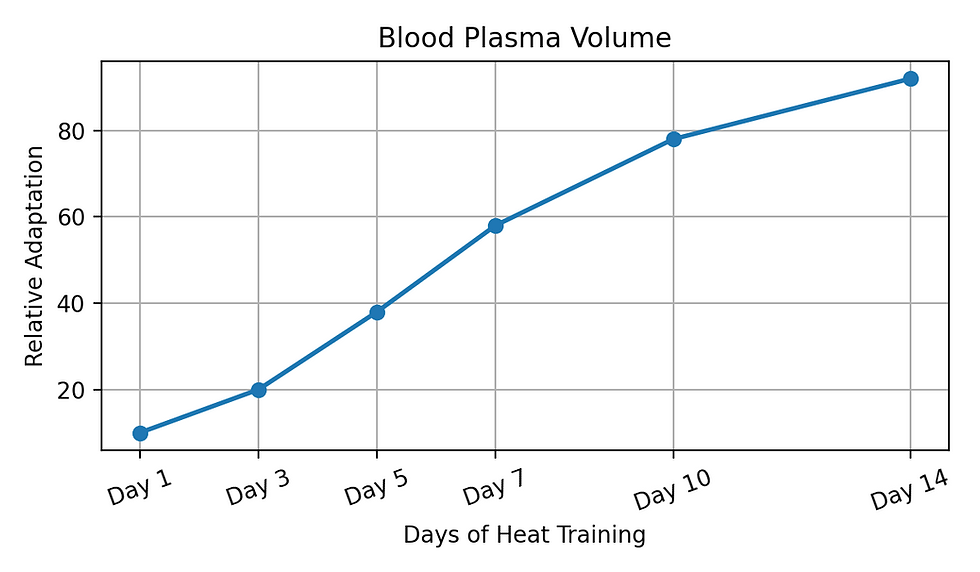
Train consistently in the heat for a week or two and remarkable changes begin to happen.
You start sweating sooner, allowing your body to cool itself more efficiently.
Your blood plasma volume increases, making it easier for your heart to deliver oxygen to your muscles.
Your heart rate gradually becomes lower while doing the exact same amount of work.
You recover faster between points. The heat hasn't become easier.
You've simply become better.
I think that's one of the most incredible things about the human body.
It responds to challenges by becoming stronger.
More Than Just Fitness
As a tennis coach, I've learned that the greatest improvements aren't always physical.
Summer teaches something much deeper.
Patience.
Discipline.
Resilience.
Some mornings your legs feel heavy.
Some days your timing is off.
Some afternoons you question why you're standing on a hot tennis court while everyone else is relaxing inside.
Then practice ends.
You realize you made it.
And tomorrow doesn't seem nearly as intimidating.
Confidence isn't built because conditions are perfect.
Confidence is built because you learn you can handle conditions that aren't.

What Happens After an Hour
One of the questions I get asked most often is what actually happens during a solid one-hour practice.
By the end of sixty minutes, an athlete averaging around 150 beats per minute has challenged nearly every major system in the body.
The cardiovascular system has worked harder to circulate blood.
The cooling system has been sweating almost continuously.
The muscles have burned through energy while adapting to repeated movement.
The brain has been forced to stay focused despite fatigue and discomfort.
That hour isn't just exercise.
It's adaptation.
Every session is another signal telling your body to become more efficient for the next one.
Respect the Heat
Now let me be clear.
There is a difference between training in the heat and ignoring the heat.
Smart athletes respect it.
Hydrate before you ever step onto the court.
Replace electrolytes during longer sessions.
Wear light-colored clothing.

Take advantage of shade during breaks.
Listen to warning signs like dizziness, confusion, nausea, or chills.
There's nothing tough about heat illness.
The goal isn't to prove how much punishment you can take.
The goal is to become a smarter, stronger athlete.
The Unsung Heroes
One thing I've always appreciated is the role parents play during the summer.
They fill water bottles before sunrise.
Pack snacks and towels.
Sit through long practices.
Drive to lessons.
Offer encouragement after difficult days.
Those little things often go unnoticed.
But they matter.
Years from now, players may not remember every drill we did or every score from every match.
They'll remember the mornings spent chasing a dream with someone who believed in them enough to get them there.
Those memories are priceless.
Why Summer Is My Favorite Season
People often ask me if I enjoy coaching during the hottest months of the year.
Without hesitation, my answer is yes.
Not because I enjoy sweating.
Not because I enjoy 95-degree afternoons.
I enjoy what summer reveals.
Heat has a way of stripping away excuses.
It teaches athletes to prepare.
To persevere.
To stay positive when conditions aren't ideal.
It reminds us that growth usually happens just outside our comfort zone.
Every drop of sweat tells a story
.
Every difficult practice adds another brick to the foundation of confidence.
When September finally arrives, players often think they've simply survived another Florida summer.
I think something much bigger has happened.
They've become stronger.
Not because the weather became easier.
Because they did.
The heat didn't break them.
It built them.
And after all these years, that's why summer is still my favorite season to coach.
Coach's Take
"Great players don't wait for perfect conditions. They learn to thrive in difficult ones. Respect the heat, prepare for it, and let it make you stronger—not just as a tennis player, but as a person."
— Paul Pisani
Owner, Title Town Tennis


Comments